Friday, April 12, 2013

In Memoriam of Sindi Medar-Gould


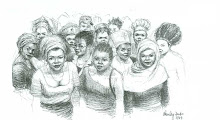
Sindi Medar-Gould

With a heavy heart and deepest sorrow we, the entire staff of BAOBAB For Women’s Human Rights (BAOBAB) announce the sudden demise of Sindi Medar Gould the former Executive Director of BAOBAB, Sindi Medar-Gould a citizen of St Lucia in the Caribbean, was a great feminist, facilitator, researcher & activist for women’s human rights in Nigeria and globally. She contributed a great deal to the emancipation and empowerment of women and girl children. Sindi’s last appointment was with the Women’s Learning Partnership for Rights, Development & Peace (WLP), as a Senior Consultant and Global Trainer. Sindi also worked with various women human rights organizations and movement. She touched many lives and helped to give women a reason to live a life with hope for a better tomorrow. She would be greatly missed and remembered as a great leader. Farewell Sindi!!!

Signed


Mma Odi
Executive Director
BAOBAB for Women’s Human Rights

 Click here to read tributes from people whose lives Sindi has touched

Wednesday, February 13, 2013

COLOUR TAG FOR “VIOLENCE”


Counting down “one” day to the “V” day (February 14), What colour would you tag “VIOLENCE” besides colour red and why? Let's hear your views....
 

Related link: one Billion Rising!

Thursday, February 7, 2013

Women in Conflict and Peace-Building

Over the past two decades, Nigeria has experienced increased levels of insecurity and violence which has claimed many lives and property. The state of insecurity has affected virtually every aspect of social and economic development and women have so far been especially affected by such violence and insecurity because of their peculiar roles as homemakers, caregivers as well as their relatively poor economic status.   

Unarmed women and children thus continue to bear the brunt of massacres that occur in different parts of the country, especially in northern Nigeria.  The mass killing that occurred in Jos, Plateau state in 2010, for example, resulted in the death of many Nigerians most of whom were women and children.  To date, the number of the victims affected by that massacre has not been confirmed.  In recognition of the precarious situation that women found themselves in that tragedy, many women organized a peaceful “wailing” protest in Abuja demanding justice and protection from such attacks.  The massacre brought about condemnations from both local and international agencies and government officials.  It also brought to light women’s interest and role in peace building processes that aim to provide rehabilitation for victims of conflict and establish preventive systems. 

Recent events of conflicts, bombing of commercial and public places in Nigeria show that conflicts must be managed, not ignored and there must be concrete efforts for peace building. Such processes must also be completely inclusive of all interests represented in the country.  Without peace there can be no meaningful development and without women’s involvement in the design and implementation of policies and programs on conflict resolution and peace-building such activities will fail to achieve its purpose.  On  October 31 2000 the United Nations Security Council unanimously adopted the Security Council Resolution 1325 (SCR1325), stating in article 2 of the Resolution: “Reaffirming the important role of women in the prevention and resolution of conflicts and in peace-building, and stressing the importance of their equal participation and full involvement in all efforts for the maintenance and promotion of peace and security, and the need to increase their role in decision- making with regard to conflict prevention and resolution”.  In addition, various other international and regional instruments as well as the Constitution of the Federal Republic of Nigeria states clearly women’s right to protection in conflict situations and their involvement (without discrimination) in peace building and conflict resolution processes. Nigeria is signatory to a host of such international instruments and laws.

BAOBAB for Women’s Human Rights in recognition of the rights of women in conflicts situation and peace building process dedicates her 2013 calendar to women in conflicts. The 2013 calendar highlights quotations from legal instruments that outlaw violence against women in conflicts and recommend women’s involvement in peace-building processes.

Friday, March 9, 2012

2012 International Women’s Day Celebrations (IWD) - March 8th 2012

Theme – ‘Connecting Girls, Inspiring futures’

Press Text

The 8th of March of every year is a day set aside by the United Nations as International Women’s Day (IWD). It is a day to recognise, celebrate and honour women’s struggles and achievements in the past years and to call attention to other areas of concerns that are critical to women’s life in particular and the society in general. This day is recognised and celebrated by various women’s human rights organisations, non-governmental organisations, civil society members, business outfits, government offices and educational institutions, in different parts of the world to bring issues that affect women to the fore.

This is necessary because of the disadvantages women face due to the disproportionate distribution of resources and gender roles in society. According to the United Nations, the majority of the world’s 1.5 billion who live on less than one dollar a day are women. Women also continue to be victims/survivors of violence both in domestic and public spheres. Violence against women including rape, incest, battery, etc continue to reoccur.  There is therefore an urgent need to introduce and implement more effective interventions to both redress and combat such incidents.

The International Women’s Day was first marked on the 19th of March in 1911 but was moved to the 8th of March in 1913.  Since then, this day has been celebrated all over the world with the sole aim of advocating, empowering and helping nations worldwide eliminate discrimination against women. It is also focused on helping women gain full and equal participation in national and global development.

The theme for the 2012 celebrations is ‘Connecting Girls, Inspiring Futures’. This is very instructive given the recent increase in incidents of rape and incest as reported in many national newspapers as well as in annual reports compiled by local and international organizations on Nigeria as well as on a number of other countries.  We all need to work together to end inhumane acts of violence against women and young girls to ensure that our society is free from all forms of such violence.

BAOBAB for Women’s Human rights is a not for profit, non-governmental organization working to promote and protect the human rights of women under customary, statutory and religious laws. As part of the organization’s intervention and advocacy to protect and promotes the rights of women, BAOBAB’s joins the rest of the world today to celebrate this remarkable event.

As part of our efforts to inspire young girls for positive change, BAOBAB has implemented various interventions which include educational empowerment for vulnerable young girls in the northern part of Nigeria, national talent competitions on easy writing and arts as well as mentoring programmes for young women interested in vying for leadership and political positions.

BAOBAB would like to use this occasion to call on the Nigerian governments to expedite action on its obligations under all national, regional and international instruments signed and ratified such as - Protocol to the African Charter on Human and Peoples’ Rights on the rights of women in Africa, Convention on the Elimination of all Form of Discrimination Against Women (CEDAW) and others. BAOBAB recognises that the enforcement of these laws as well as the stipulations of non-discrimination in the Nigerian Constitution will further protect our women and young girls and expedite the realization of the United Nations Millennium Development Goals.

We would also like to use this opportunity to task the media to engage in more gender sensitive reporting, to give issues of women’s human rights and advocacy more visibility which will bring about positive development for the nation.

The organization encourages all stakeholders in the field of justice and human rights not to relent in their effort against violence against women until women and girls’ human rights become an integral part of everyday life.

Women and girls should be able to live a life void of violence. This we can achieve through our collective responsibilities.

Thank you.


Mma Odi
Executive Director

Friday, November 25, 2011

Press Statement on the occasion of the "16 Days of Activism against Gender Violence"

BAOBAB for Women’s Human Rights (BAOBAB)
On the occasion of the
“16 Days of Activism against Gender Violence”
Lagos, Nigeria, November 25 2011
Press Statement


Distinguished Ladies and Gentlemen of the Press,

BAOBAB for Women’s Human Rights (BAOBAB) happily welcome you to this Media conversation happening on the first day of the “16 Days of Activism against Gender Violence,” “From Peace in the Home to Peace in the World: Let's Challenge Militarism and End Violence Against Women’.”

The 25th November every year marks the beginning of the “16 Days of Activism against Gender Based Violence” which is an international campaign that started in 1991 dedicated to advocate against all forms of Gender Based Violence. The 16 Days runs from November 25, (International Day against Violence against Women) to December 10, (International Human Rights Day) to symbolically link violence against women and human rights and to emphasise that such violence is a violation of human rights. This 16-day period also highlights other significant dates including December 1, which is World AIDS Day, and December 6, which marks the Anniversary of the Montreal Massacre in 1989, when 14 women students were massacred by a lone gun-man opposed to the affirmative action policies promoted by feminists at the University of Montreal.

Since the “16 days…” campaign started, this period has been utilized by various women’s groups to call for the elimination of violence against women by raising awareness about gender based violence as a human rights issue at the local, national, regional and international levels; strengthening local work around violence against women; establishing a clear link between local and international work to end violence against women; providing a forum in which organisers can develop and share effective strategies; demonstrating the solidarity of women around the world organising against violence against women and creating tools to ask governments to implement promises made to eliminate violence against women.

Over the years, gender based violence has been a cause for concern in Nigeria and the world at large. This is mainly due to the very patriarchal nature of the society and obnoxious cultural beliefs that subjugate women and lead to their systemic discrimination in private and public spheres. The need for strategic campaigns and interventions has become even more crucial with recent reports of the prevalence of rape and assault cases on women and young girls in the country. This rise in the number of cases is a very worrisome development as BAOBAB has also continued to receive more reports of violence against women at its offices and via email and telephone calls. Two of such cases of violence are the alleged infamous gang rape in August 2011 of a young woman by 5 men suspected to be students of Abia State University, as well as the rape of female students of St Anne’s college Ibadan, Oyo state. There was also the cold murder of a female banker allegedly by her husband, amongst others.

The theme for this year’s campaign is ‘From Peace in the Home to Peace in the World: Let's Challenge Militarism and End Violence against Women’. BAOBAB for Women’s Human Rights is today joining other partners around the world to mark the period with a series of activities which include: a Gender and leadership training for young boys and girls between the ages of 13 -17 years; solidarity street campaign by a network of Men and Boys against Violence against Women (MABVAW); an in-house debate by the BAOBAB team on “Violence Against Women and Globalization, ”as well as various social advocacy activities by members of our community based volunteer outreach teams in 15 states of the country.

BAOBAB is using this opportunity to call on the government of Nigeria to:

1. Expedite the passage of the Gender and Equal Opportunities Bill into Law;

2. Expedite the reintroduction, adoption and passage of the Violence Against Persons Prohibition Bill into Law;

3. Establish support mechanisms including one-stop centers for victims of SGBV and formal shelters in collaboration with women focused NGOs;

4. Strengthen existing laws and frameworks to protect women from FGM and other harmful practices

5. Increase involvement of women in peace building processes and strengthen CSO collaboration for sustained engagement in conflict prevention and peace building.

6. Improve the collection of disaggregated data and maintenance of statistics on SGBV.

7. Ensure efficient investigation and prosecution of SGBV cases.

Distinguished friends of the Press and fellow agents of social transformation, once again we are happy that you have honoured this invitation to participate in the conversations of the next few hours and some of the activities with us, and we hope that this will translate to further collaboration towards eliminating all forms of gender based violence and consequently promote human development. Remember, if it is not good for your mother, daughter or sister, then it is not good for any woman! Let’s stop violence against Women now!

Thank You all

Chibogu Obinwa

Ag. Executive Director


Monday, November 21, 2011

Concept Note - “16 Days of Activism against Gender Based Violence” (2011)

BAOBAB for Women’s Human Rights
 “16 Days of Activism against Gender Based Violence”
November 25th – December 10th   2011
Theme: “From Peace in the Home to Peace in the World: Let's Challenge Militarism and End Violence against Women.”
Concept Note
Gender-based violence is a universal reality existing in all societies regardless of economic status, class, culture or any other diversity. So many women have, and are experiencing this form of violence which has adversely affected their well being as well as productivity in their homes, communities and places of work. This problem in a country like Nigeria is mainly due to the very patriarchal nature of the society and obnoxious cultural beliefs, which suppress women and leaves them to suffer in silence. These inhumane acts have continued to prevent women from achieving their maximum potentials and compromise their physical and psychological integrity.
The 16 Days of Activism against Gender Based Violence is an international campaign that was started by the Center for Women's Global Leadership (CWGL) in 1991. The 16 Days runs from November 25, (International Day against Violence against Women) to December 10, (International Human Rights Day) to symbolically link violence against women and human rights and to emphasise that such violence is a violation of human rights. This 16-day period also highlights other significant dates including December 1, which is World AIDS Day, and December 6, which marks the Anniversary of the Montreal Massacre in 1989, when 14 women students were massacred by a lone gun-man opposed to the affirmative action policies promoted by feminists at the University of Montreal.


Since it began, the 16 Days of Activism has been used as an organising strategy by women’s groups to call for the elimination of violence against women by raising awareness about gender based violence as a human rights issue at the local, national, regional and international levels; strengthening local work around violence against women; establishing a clear link between local and international work to end violence against women; providing a forum in which organisers can develop and share effective strategies; demonstrating the solidarity of women around the world organising against violence against women and creating tools to pressure governments to implement promises made to eliminate violence against women.
BAOBAB for Women’s human Rights in line with one of its objectives to partner with like-minded organizations, is joining other groups across the world to mark the 2011  “16 days of Activism against Gender Based Violence.”
The theme for this year’s campaign is ‘From Peace in the Home to Peace in the World: Let's Challenge Militarism and End Violence against Women’.
In line with this theme, the following activities have been planned for the period.

1.       Media Conversation
BAOBAB plans to invite some members of the Media (both electronic and print) for a briefing on the concept of the “16 Days…” campaign, and for a post briefing conversation around gender based violence in Nigeria, the role of the social responsibility of the media and follow-up action. The media will also be invited to interview a few of the teenage students who will be in attendance regarding their role in addressing gender based violence in Nigeria.  
Date: November 25th 2011
Venue: BAOBAB’s Conference Hall
Time: 9am

2.      Peer Educators’ training on GBV and leadership training for young boys and girls, respectively, between the ages of 13 -17 years.
Society has changed over the years. One of the most significant changes that will have a great impact in the development process and leadership is the involvement of adolescents in leadership. With the influence of globalization and modern social media, teens of today desire different things from teens of yesterday. These drives pull or attract teens to negative activities or towards a desirable goal or objective. The power of peer influence and helping teenagers cope with the universal, everyday problems and pressures of becoming adults which involves team building is the essential foundation of a strong, diverse and democratic society. BAOBAB recognizes the strategic importance of mentoring leaders while they are young especially as leadership skills can be learned by those who might never imagine themselves playing such prominent role in the world.
In view of this, BAOBAB will organize a two (2) day Peer Educators’ training on GBV for young boys and a three (3) day transformative leadership training for young girls both in Lagos state.

Date:     25th and 26th November 2011 (Training for teenage boys)
               28th -30th November 2011 (Training for teenage girls)
Venue: BAOBAB’s conference hall

3.      Men and Boys against Violence against Women (MABVAW) solidarity walk.
Globally, there is more recognition of the need to involve men and boys in the campaign to end violence against women. Since 2005, BAOBAB has translated this strategy of involving men and boys to address gender based violence to local advocacy mobilizing and action. Our first gender sensitization training and debate was organized in 2005, with the male relatives and friends of BAOBAB in attendance. We have since then organized different groups of men and boys in gender awareness workshops, popular theatre, ‘men-only’ led street campaigns on anti-gender based violence, and open debates. These men have been committed to lead the campaign against violence against women.   We have also been doing on-line advocacy to provoke strategic discussion on involving men and boys to address violence against women. The general feedback we received, spurred us on to institutionalize this strategy and extend it nationally and possibly regionally.
 This year, BAOBAB will organize a solidarity campaign walk around the Ogudu environs where men and boys will disseminate stickers with varied anti gender based violence messages and other IEC materials as well as sensitize people on issues of violence against women.
Date: 9th of December 2011
Venue: Take of point is BAOBAB’s office

4.      In-house debate on Violence Against Women and Globalization
As a means of updating BAOBAB personnel knowledge base, BAOBAB will organize a debate on “Globalization and Gender based Violence.” 

Venue: BAOBAB’s conference hall
Date: 8th December 2011

5.      Community Based Outreach activities
BAOBAB’s volunteer outreach teams in 15 States of Nigeria will also organize various social advocacy activities (e.g. media briefing, street campaigns etc) to raise awareness against GBV.
BAOBAB believes that these activities will further enhance public knowledge of GBV and opportunities/avenues for access to justice for the violated–all geared towards ensuring that ‘Women’s Human Rights become an integral part of everyday life’
6.      Expected Outcomes
  • An increased awareness by the general public, the media, law enforcement and other state agents towards addressing cases of violence against women and girls –especially domestic violence
  • Increased awareness amongst men and boys on women’s human rights in general, and different dimensions of violence against women in particular
  • Beneficiaries committing to initiate programmes e.g. teenage girls and boys initiating social clubs in schools and religious institutions, to campaign
  • Significant reduction of incidents of VAW
  • Increase and strengthen the network of men and boys who campaign against VAW


Gender Violence; Women mostly affected - by Theresa Kelubia

Violence is an act carried out with the intention or perceived intention of physically harming another person. From a gender perspective, it is a violent act perpetrated on women mostly by men because they are women. It has also been pointed out by the society that women are vulnerable to various forms of violent acts for several reasons such as being seen as weaker vessels,   being financially dependent on their men, and low self esteem. When there is a crisis woman and young girls are usually targeted and this has led women to be subjected to rape, sexual harassment, just to mention a few.
Rape has become the issue of the day as many women and young girls are victims of this evil act. Rape is an unlawful carnal knowledge of a woman or a girl without her consent. The word rape sends shivers down the spine of most women, I for one. It is the worst sexual assault and violence any women can be subjected to but a very common incident in our society today. Women are often raped by their fathers, stepfathers, uncles, strangers and robbers.
It is bad enough for robbers to do away with your valuable goods but very devastating when they encroach on the most valuable, priceless part of you, carting away with that which cannot be replaced in a life time, leaving the victims with a life-time  scare,  a condition that in most cases has an adverse effect on them. In the same vein, it is very bad to hear a situation where a father will rape his own daughter. It is very disheartening. This in turn has other very traumatic consequences such as; expulsion from school, early/unplanned pregnancy, HIV/ AIDs, abortion and in certain cases death.
In relationships with men, women are also said to be vulnerable (weaker vessels).  This relates to the society’s concept that views women as property owned by men and dependant on their male ‘protectors’. Many women suffer humiliation, brutalization and battering as a result of this misconception. The marriage of under-aged girls against their will is a harmful practice embedded in many cultures and traditions. The root causes are complex but driven by factors that include gender inequalities, poverty, negative traditional or religious practices, weak enforcement of laws that prohibit such practices as well as pressures caused by conflict and natural disasters. It is a cross border issue affecting women and young girls in many countries around the world.
Violation of women’s human rights exist in three contexts- the family, community and the state. It is very appalling that the family is a major site of violence from the very moment a female child is born she is considered as a second-class. She is deprived of education and inheritance in favour of her male siblings. Everything done to her is geared toward preparing her to carry out her duties to her husband and family. The community culture, religion and ethnic values play a critical role in reinforcing the structure of the family and the position of women within it. The community plays the role of defining gender relations within the ideal family and often set the stage for female subordination. Punishment for extra-marital sex, rape and other forms of physical chastisements  are amongst additional practices of gender violence perpetrated against women in the name of preserving ethnic or religious integrity. At the state level, for example in Nigeria the rights of women are clearly spelt out in the nation’s constitution. Rights is defined as “A power, privilege or immunity, guaranteed under the constitution. Respect for rights is seen as a matter of justice. The rights of women enshrined in the Nigerian constitution are consistent with the ideals of humanism. Unfortunately, it is sad to say that those rights and ideals have remained paper tigers, mere theoretical postulations without any practical bearing on the lives and conditions of women.
Every woman deserves more than being seen as a weaker vessel, and discriminated against in the society. Domestic violence in the country should be discouraged. Women should be protected and not to be destroyed. Nigeria is blessed with women and if encouraged and given the opportunity, they will contribute substantially to the development of the country and Nigeria would become a better place. "A woman's body is the only piece of Real Estate on which she owes no mortgage." (Glenda Simms, Jamaica)

References:
Margaret Schuler- Freedom from violence women’s strategies from around the world
Akanda L. & Shamim. I (1984) Women and Violence: A comparative study
http://www.huffingtonpost.co.uk/adam-short/child-brides-a-rights vio_b_986669.html?ncid=edlinkusaolp00000008
Women unfairly treated by policy-makers”, Daily Sun Newspaper, Tuesday, June 22, 2010, p 7.